Quick answer
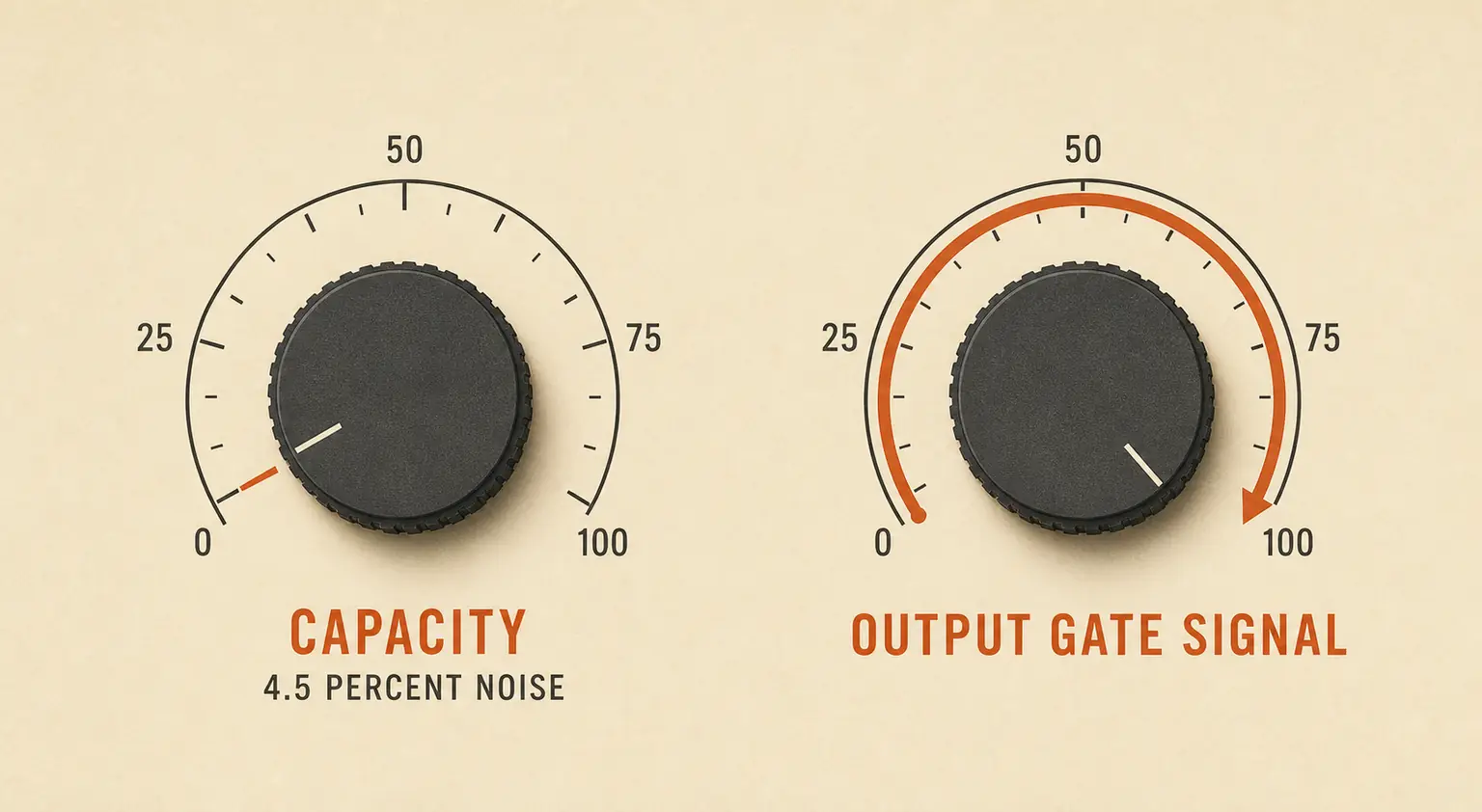
The Jackery Explorer 1000 v2 and EcoFlow DELTA 2 are the same class — ~1kWh LiFePO4 solar generators — and the spec sheet is closer than the brands’ marketing suggests: 1,070Wh vs 1,024Wh capacity (a 4.5% difference that never decides anything), 1,500W vs 1,800W continuous AC, ~400W vs ~500W solar input (all per manufacturer specifications, retrieved 2026-09-06). What actually decides it: your biggest continuous load against the 1,500W/1,800W line (a microwave, hair dryer, or job-site tool settles it), whether you’ll expand later (the DELTA 2 takes extra batteries; the Jackery doesn’t), and whether you carry it (the Jackery is ~2.6 lbs lighter). Neither is “better” — one of them fits your load list, and this page shows you which.
We test nothing. Every number below is manufacturer-published and dated; the comparisons are arithmetic you can re-run.
The honest spec table (manufacturer-published, retrieved 2026-09-06)
| Spec | Jackery Explorer 1000 v2 | EcoFlow DELTA 2 | What it decides |
|---|---|---|---|
| Capacity | 1,070Wh | 1,024Wh | Almost nothing — 4.5% apart |
| Chemistry | LiFePO4 | LiFePO4 | Tie: both outlive the old NMC generations |
| Continuous AC | 1,500W | 1,800W | Your biggest load — see the gate math |
| Surge | Handles motor starts per manufacturer claims | 2,700W rated surge | Fridge/freezer starts: both fine |
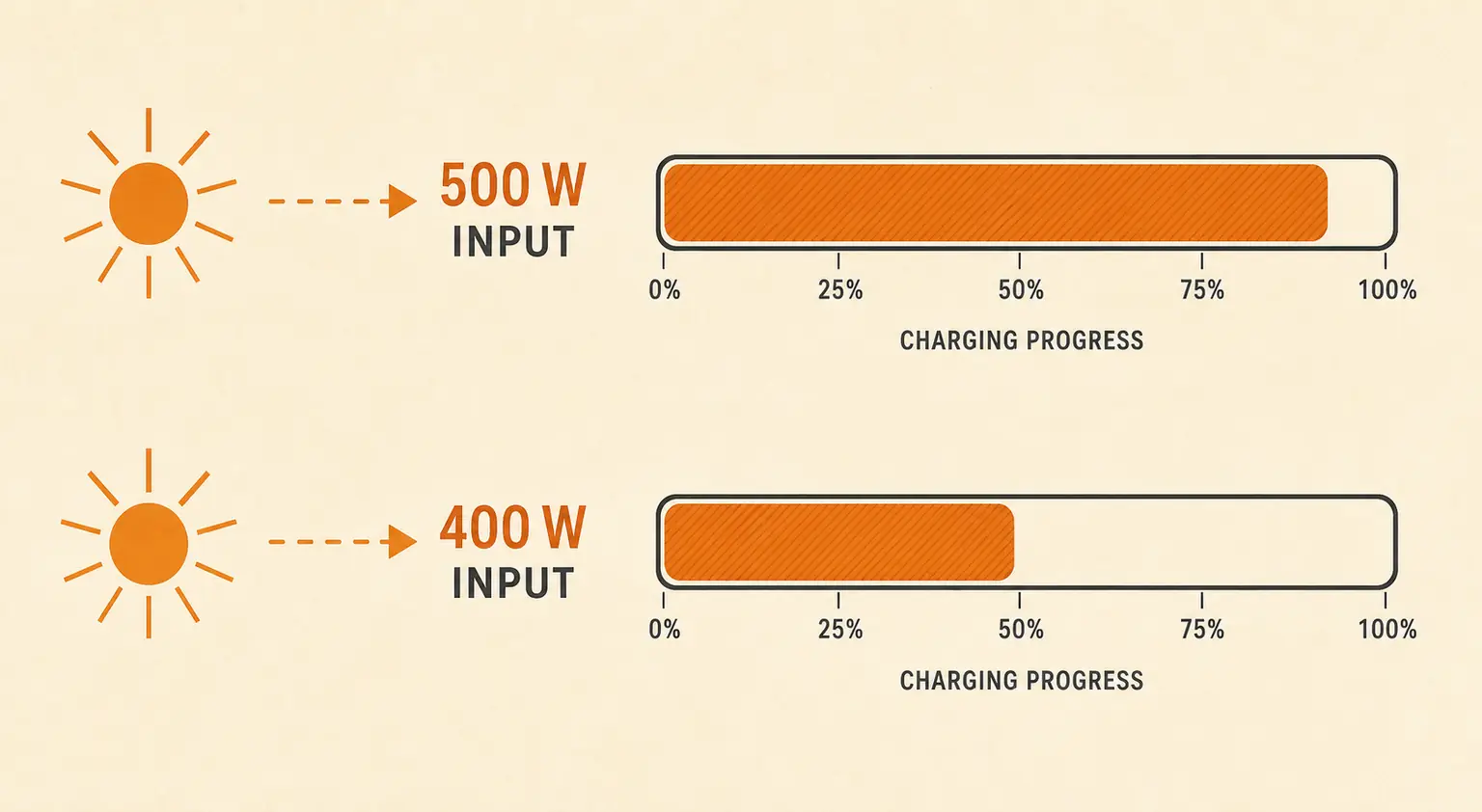
| Solar input | up to 400W | up to 500W | Solar recharge speed (25% faster on paper) |
| AC recharge | ~1 hour to 100% (fast charge) | ~50 min to 80% | Both fast; wall-charging is not the differentiator |
| Cycle life claim | 4,000 cycles to ~70% capacity | 4,000 cycles to ~80% (per official manual; some listings say 3,000) | Conditions differ — read the footnote below |
| Expandable | No | Yes (DELTA 2/Max extra batteries, ~2–3kWh) | Growth plans |
| Weight | ~23.8 lbs | ~26.4 lbs | Car-camping vs wheelbarrow duty |
| Warranty | Check current listing terms | 5 years | Verify at purchase; terms change |
Sources: jackery.com Explorer 1000 v2 product page; EcoFlow DELTA 2 product page and official manual (both retrieved 2026-09-06). Cycle-life footnote: “4,000 cycles” means different end-of-life thresholds (70% vs 80% capacity retained) — a Jackery cycle claim and an EcoFlow cycle claim are not directly comparable units, which is exactly the kind of fine print our spec-table rules exist to catch.
The gate math: your biggest continuous load
This single calculation picks the winner more often than every other spec combined:
- Loads under 1,500W (fridge, CPAP, router+laptop, lights, TV, fan, most medical devices): both units run everything you have — the gate doesn’t decide, move to the tiebreakers below.
- Loads between 1,500W and 1,800W (many hair dryers, some microwaves, some induction plates, job-site tools): the DELTA 2 runs them; the Jackery 1000 v2 doesn’t. If your emergency list includes one of these, that’s the ballgame — or consider the Jackery 2000-class instead of fighting the gate.
- Loads over 1,800W (well pumps that turn out to be 240V submersibles, big table saws, some space heaters): neither unit — and no adapter fixes a 240V submersible; that’s the well-pump page’s separate problem.
Worked runtime math at the class level (usable ≈ 90% of nameplate on LiFePO4): 1,070 × 0.9 ≈ 963Wh vs 1,024 × 0.9 ≈ 922Wh — about 21 vs 20 hours of a 45W CPAP+humidifier setup, or roughly one day of a modern fridge’s cycling (~0.9–1.2kWh/day; measure yours with the method in our refrigerator sizing page). A 4% capacity difference disappears into measurement noise.
Solar recharge: where they actually differ
With their max solar inputs (400W vs 500W, per manufacturer specs) and ~85% charge efficiency:
- DELTA 2 at 500W in good sun: 0 → 100% in roughly 2.5–3 sun-hours.
- Jackery at 400W: roughly 3–3.5 sun-hours.
- Both need the panels bought or bundled separately — check whether the listing you’re buying includes them (the EcoFlow 220W bundle is a common configuration).
In winter or shade, both numbers stretch badly (see peak sun hours); if solar recharge is your primary plan, the 25% input difference matters more than any capacity difference. If you’re mostly wall-charging between uses, ignore this row entirely.
The tiebreakers that remain
- Expansion: planning to grow into whole-outage coverage later? The DELTA 2’s extra-battery path (~2–3kWh, per manufacturer) means the base unit isn’t dead weight. The Jackery path is buying a second station.
- Weight and grab-ability: ~23.8 vs ~26.4 lbs and the Jackery’s smaller case — real for campers, irrelevant for a shelf unit by the freezer.
- Cycle-life conditions: if you’ll cycle daily for years, the end-of-life threshold (70% vs 80%) deserves a look — both are LiFePO4 multi-thousand-cycle chemistry, a generational improvement over the NMC units both brands sold five years ago.
- Outlets and pass-through: count what your actual load list needs (the DELTA 2 carries more outlets; both pass through for UPS-style duty with fast switchover per manufacturer claims).
And the third option worth naming: at this budget, some readers are better served by a 100Ah LiFePO4 battery + inverter + controller built to the same capacity for less money — the DIY vs station tradeoffs are worked out in our solar generator guide. Stations win on integration and grab-and-go; builds win on $/Wh and growth.
Frequently Asked Questions
Which is better overall, Jackery or EcoFlow?
Is 1,070Wh vs 1,024Wh a real difference?
Can either one run a microwave?
Did you test these stations?
Which charges faster with solar panels?
Next logical reads
What size station runs a refrigerator Solar generators: the honest guide Well-pump sizing (the 240V problem) CPAP battery backup Peak sun hours by state
1,024Wh LiFePO4, 1,800W continuous (2,700W surge), up to 500W solar input, expandable with extra batteries (per manufacturer specs, retrieved 2026-09-06). Not for: 240V loads like submersible well pumps, or builds where a DIY battery-inverter system delivers the same capacity for less. The honest tradeoff: ~2.6 lbs heavier than the same-class Jackery, and the expansion path only pays off if you actually take it.
Check price on Amazon (opens in a new tab) Price & availability shown on Amazon.com — we may earn a commission.1,070Wh LiFePO4, 1,500W continuous, up to 400W solar input, dual 100W USB-C, ~23.8 lbs (per manufacturer specs, retrieved 2026-09-06). Not for: 1,500–1,800W loads (the DELTA 2's gate) or growth plans that want extra batteries later. The honest tradeoff: the lighter, grab-and-go case trades away 300W of continuous headroom and every expansion path.
Check price on Amazon (opens in a new tab) Price & availability shown on Amazon.com — we may earn a commission.