Quick answer Where salvage comes from The two-measurement test Worked examples Mismatch math The controller is mandatory Damage triage FAQ
Quick answer
A salvaged panel is worth exactly what its last test says — and a $30 multimeter tests one in five minutes: open-circuit voltage (Voc) proves the panel lives, short-circuit current (Isc) proves it can deliver. A panel with shattered glass may still produce; a pristine-looking panel with a blown bypass diode may be firewood. One tested, labeled panel matched to a suitable charge controller is worth more than a stack of unidentified ones. Test before you carry, label what you test, and never wire mystery panels into the same string — the mismatch math below shows why.
Where salvage comes from
Panels outlive the structures under them — typical degradation is well under 1% per year, so a two-decade-old panel may still deliver around 90% of its nameplate. Realistic sources, ordered by test-ability:
- Roofer and installer replace-offs. Re-roofing and system upgrades discard working panels in bulk. Best source: the label is intact and the history is askable.
- Reuse stores and recycler yards. Growing inventory as early systems age out; bring a multimeter and test in the yard.
- Marketplace listings. Ask for a photo of the label (Voc, Isc ratings) before driving out — no label, much harder to integrate safely later.
- Farm outbuildings, signage, remote telemetry. Small 10–50W panels, often free for the asking, perfect for communications trickle-charging.
- Post-disaster debris. The hardest case: unknown history, possible hidden damage. Triage ruthlessly with the table below.
Preserve the rear label with tape or a photograph the moment you take custody. An unreadable label makes a panel dramatically harder to match to a controller later.
The two-measurement test
The full procedure with safety framing lives in our multimeter testing guide — the salvage context compresses to:
- Clean the glass, aim it at full sun, tilt toward the sun. Dirt alone can cost you 10%+ of the reading.
- Voc (voltage, panel disconnected): meter on DC volts, range above the label’s Voc. A healthy panel reads near label in good sun.
- Isc (current, meter in current mode across the terminals, briefly): healthy panels read 70–90% of rated Isc in real conditions — that’s physics (angle, haze, temperature), not a defect.
- Judgment: Voc near zero → dead panel or broken wiring. Voc fine but Isc near zero → internal string or bypass-diode failure. Both healthy → keeper; log the numbers.
Both salvage tests — Voc and the brief Isc check — sit inside this meter's DC voltage and 10A current ranges for typical 12V/24V panels, with a 600V CAT III rating covering series strings safely (per manufacturer spec). Not for: high-voltage residential string systems. The honest tradeoff: manual ranging means you think about scale before every reading — in salvage work, that pause is a feature.
Check price on Amazon (opens in a new tab) Price & availability shown on Amazon.com — we may earn a commission.Worked examples
Keeper. Label: 100W, Voc 21.0V, Isc 6.0A. Measured in full sun: Voc 20.6V (98% — healthy), Isc 4.7A (78% — normal real-world), and under load roughly 17V × 4.2A ≈ 72W delivered (72% of nameplate — typical for fixed-tilt reality). Verdict: a solid 70W panel for the price of carrying it.
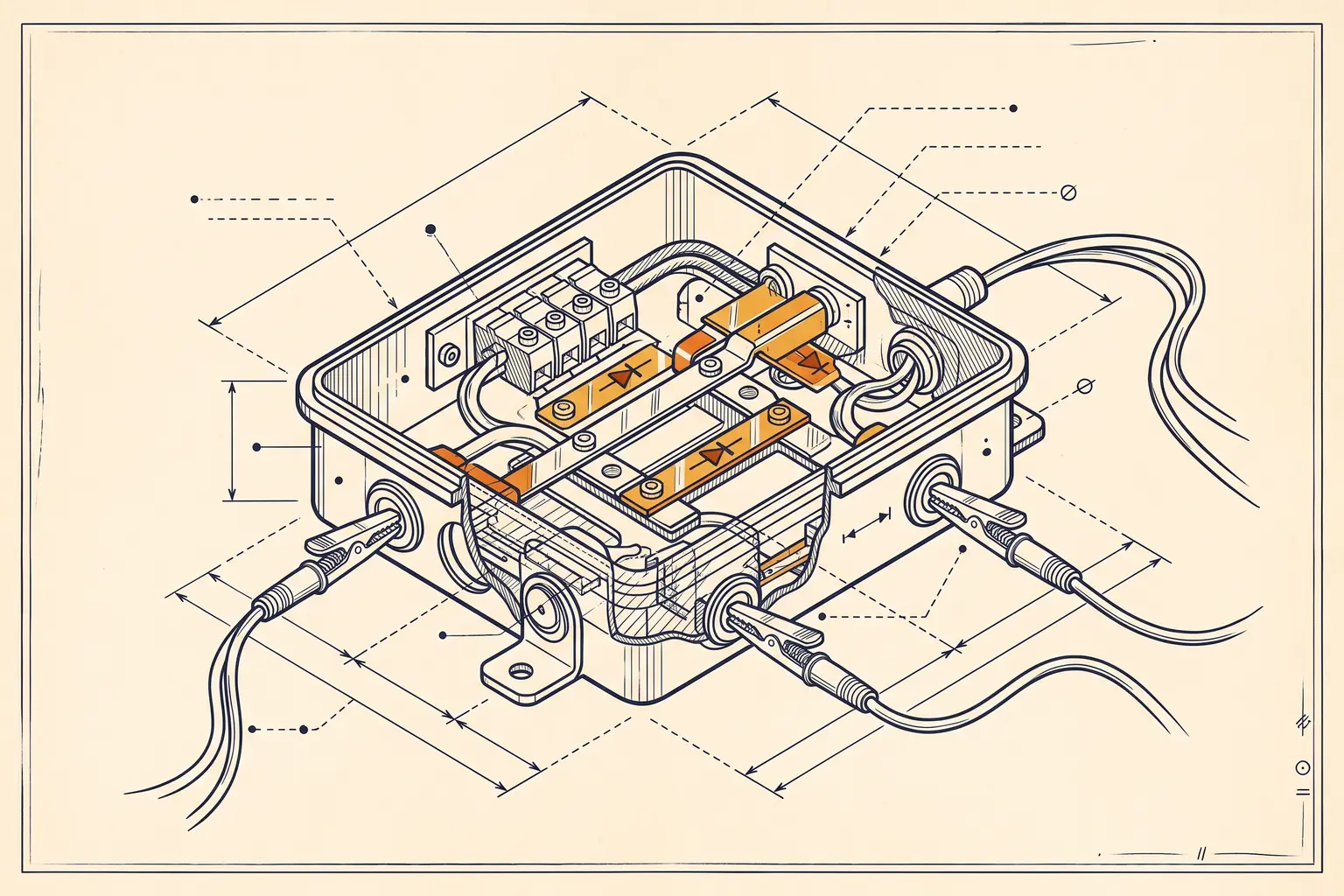
Parts. Same label class. Measured: Voc 20.8V (fine) but Isc 1.2A (20% of rating). Voltage without current means a cracked cell string or a blown bypass diode — output collapses under load. Verdict: not worth the controller it would occupy.
Mystery panel, no label. Measured Voc 19.8V, Isc 3.4A → roughly a 50–60W class 12V-nominal panel. Usable, but label it with today’s date and numbers — in a month even you won’t remember which panel measured what.
Mismatched panels: the math
This is where salvage systems die. Series strings share current; parallel strings share voltage (the wiring fundamentals):
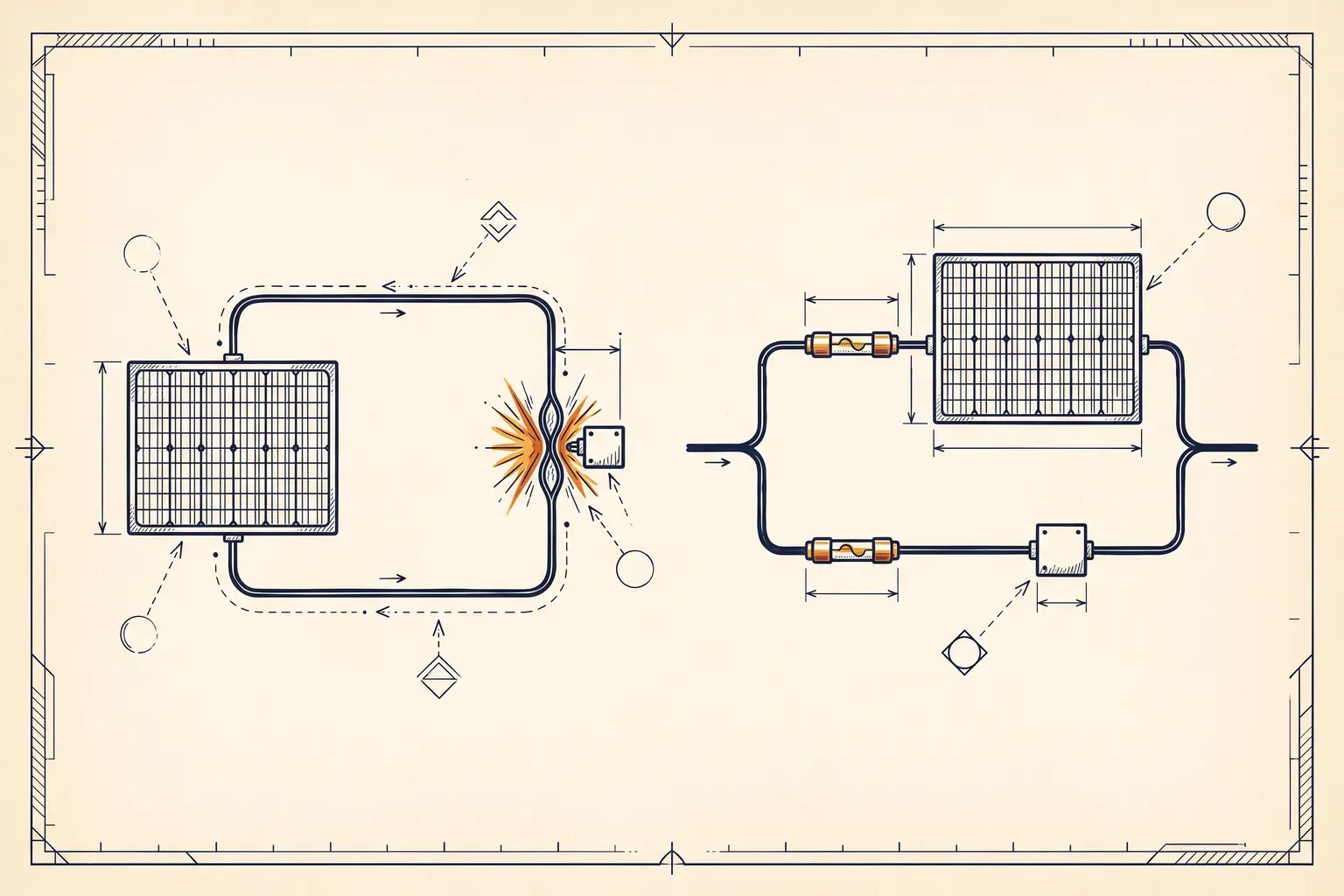
- Series mismatch: a 100W panel (6A) in series with a 50W panel (3A) runs the whole string at ~3A. Voltage adds (18V + 18V = 36V) but power is 36V × 3A = 108W from 150W of panels — the big panel wastes half its capability. Rule: series-string only panels of the same current class.
- Parallel mismatch: different-voltage panels in parallel fight; the higher-voltage string can back-feed the weaker one. Blocking diodes help, but the honest rule is the same: parallel only matched panels, and fuse each string.
- The salvage heuristic: one tested panel matched to one suitable controller beats any mismatched pile. Mismatched hardware is where “free panels” quietly becomes an underperforming, overcomplicated system.
The controller is mandatory
A “12V” panel holds an open-circuit voltage near 21V. Straight to a 12V battery (resting around 12.9V), it will keep pushing current far past the 14.2–14.6V absorb range — gassing a lead-acid bank dry or, with lithium in the cold, plating metallic lithium permanently (the chemistry is here). Emergency field practice sometimes monitors voltage by hand and disconnects manually; treat that like cooking indoors over open flame — possible, watched, never the plan. A controller is the cheapest component that protects the most expensive one; the controller classes are compared here, and sizing is its own guide.
For one or two tested salvage panels and a 100Ah-class bank: Bluetooth monitoring (you watch real harvest, not guesses), lithium presets, temperature compensation (per manufacturer spec). Not for: arrays beyond ~260W on 12V — move up to the 30A class. The honest tradeoff: pricier than budget PWM controllers, but a mismatched or degraded salvage panel needs MPPT's tolerance more than new panels do.
Check price on Amazon (opens in a new tab) Price & availability shown on Amazon.com — we may earn a commission.Damage triage table
| Condition | Test signature | Verdict |
|---|---|---|
| Cracked glass, cells intact | Voc/Isc normal or slightly low | Usable — seal with clear UV-stable tape; monitor |
| Cracked glass through cells | Isc well under 70% of rating | Parts only |
| Burnt / melted junction box | Any anomaly, scorch smell | Reject — fire history |
| Delamination, browning, snail trails | Isc 50–85% depending on extent | Usable at reduced power; derate and label |
| Bent frame, intact cells | Normal readings | Usable; re-square or remount loose |
| No label | Your measurements become the label | Usable once tested; photograph and tag |
| Corroded connectors | High Voc, low delivered current | Replace MC4 connectors; retest |